

Harness Racing
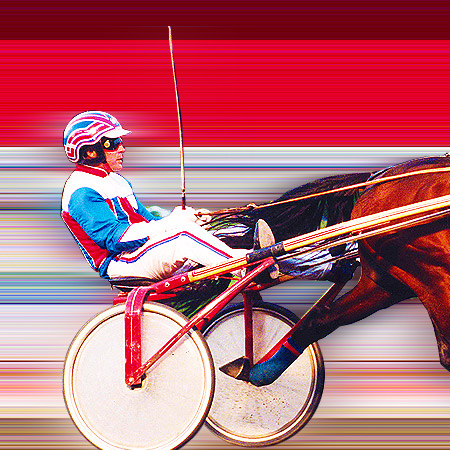
A harness race is a race involving people riding in sulkies behind horses. A sulky is a light, open two-wheeled vehicle accommodating only the driver that is drawn by a horse.
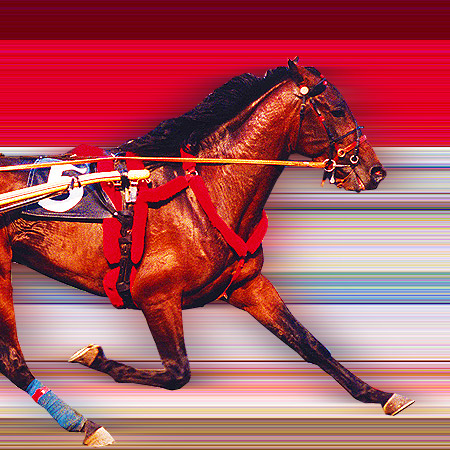
Harness racing is contested on two gaits, the trot and the pace.
A gait is a horse's manner of walking or running on foot. Trotters move with a diagonal gait; the left front and right rear legs move in unison, as do the right front and left rear.
Pacers, on the other hand, move their legs on one side of their body in tandem: left front and rear, and right front and rear.
This action shows why pacers are often called "sidewheelers." Pacers account for about 80% of the participants in harness racing, and are aided in maintaining their gait by plastic loops called hobbles, which keep their legs moving in synchronization.
Trotters are more popular in Europe while pacers are more popular the North America.
The Standardbred is the fastest horse in harness, and is the most popular trotting / pacing breed. The standardbred horse was founded on Messenger, a thoroughbred that was imported from England in 1788.
However, he didn't race in harness. The foundation sire was an in-bred descendent of Messenger named Hambletonian 10 who was foaled in 1849.
The first harness races were held along city roads, with men challenging their friends to see who had the swifter steed.
Often the streets of major cities were cleared and races held. Hence, so many American cities have a Race Street. Harness races later became a popular attraction at many county fairs.
Today, there is a large concentration of harness racing tracks in the Northeast and Midwest United States.
Virtually every major population center in these areas boasts one or more harness tracks. The sport is also popular in Florida, California, and throughout Canada.
Each year in North America, over 30 million people attend harness racing events.
Place a bet on your favorite horse now.
Harness Races Horses Pull A Sulky
A harness racing sulky, also called a racebike, is a two-wheeled, single-seat cart pulled by harness race horses during a race. It's apparently called a "sulky" because the driver must prefer to be alone (pun intended). A sulky may be made of carbon fiber, aluminum, titanium, stainless steel or wood.
Place a bet on your favorite horse now.
Harness Horses Are Fast
Depending on the level of horses competing, the average speed during a harness race range from 25-30 mph (40-48 kph). Coming down the home stretch, the racing speed can peak to over 35 mph (56 kph).
Always B Miki holds record for the fastest mile in harness racing history after winning the $138,000 Allerage Farms Open Pace in 1:46 at The Red Mile in 2016. The time eclipsed Cambest’s mark of 1:46.1, which was set in a time trial at Springfield, Ill., in 1993.